Mathi Hospitals

Typically replies within minutes

×
Do you have any questions about our Hospitals? Feel free to ask us!

Chat With Us
● Online

Fibroids

blog details

What are fibroids?

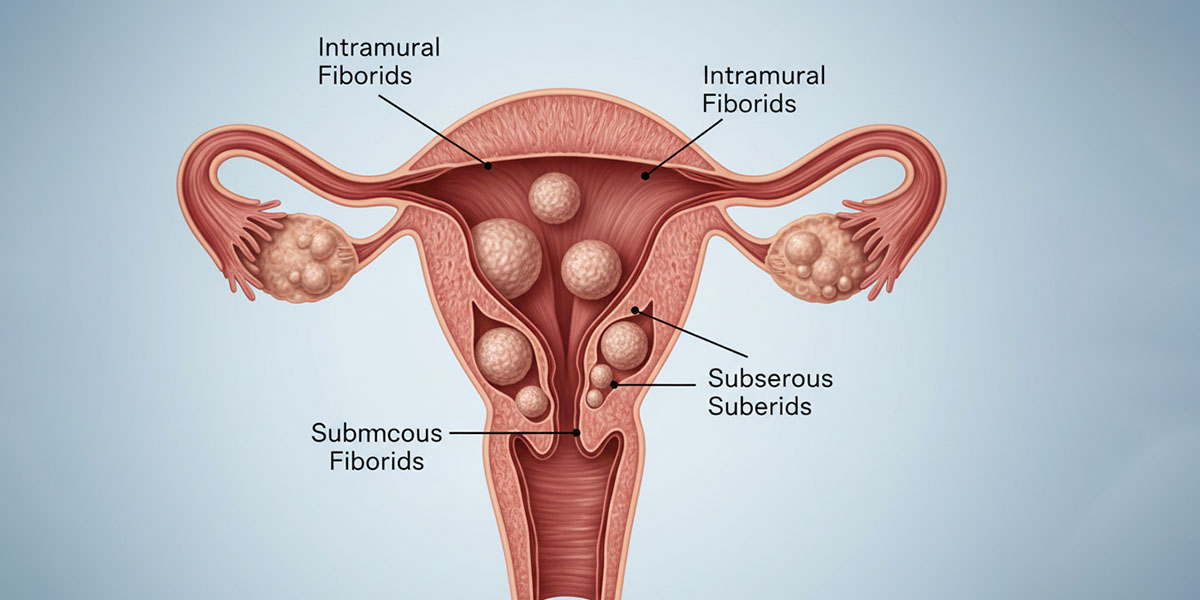
Fibroids are muscular tumours that grow in the wall of the uterus (womb). Fibroids are almost always benign. Very rarely cancerous change can occur (<0.5%). They can be single or multiple. They can be as small as a pea to as big as a watermelon.

What causes fibroids?

The exact cause is not known but hormonal and genetic factors could play a role.

Who gets fibroids?

Age: Fibroids are commonly seen in women of reproductive age group, especially during their 30s and 40s. After menopause, fibroids usually shrink

Parity: Those who have children seem to be protected from fibroids

Family history: Having a family member with fibroids increases the risk

Types of fibroids

Most fibroids grow only within the muscle wall (intramural), but some grow inwards appearing inside the uterine cavity (submucous). Others may grow outwards from the uterus and protrude into the pelvic cavity (subserous).

What are the symptoms?

Many women do not have any symptoms but some can have:

  • Heavy menstrual bleeding which is the most common symptom, especially with submucous fibroids
  • Pain: severe cramps and painful menses
  • Discomfort, bloating and heaviness (with bigger fibroids)
  • Urinary frequency or retention or constipation due to the fibroid pressing on the bladder or bowel
  • Decreased fertility - if they are blocking the tubes or in the uterine cavity

How are fibroids diagnosed?

Often fibroids are diagnosed incidentally during a routine gynaecologic examination or ultrasound done for other reasons.

They may also be detected during investigations for subfertility, such as laparoscopy

Ultrasound helps the doctor assess the number of fibroids, the exact size and location

What happens if pregnancy occurs?

Most women with fibroids have normal pregnancies. With some women there can be:

  • Abdominal pain - This pain may come on and off and could be severe enough to warrant pain-killers
  • Increased risk of spontaneous miscarriage/premature delivery
  • Increased risk of Caesarean section
  • Excessive bleeding after delivery

What helps decide the method of treatment?

The best treatment for fibroids depends on several factors. These include:

  • Presence of symptoms (such as heavy bleeding, pain, pressure symptoms)
  • Desire for future pregnancy
  • Size of the fibroids
  • Location of the fibroids (inside the uterus, within the muscle, or on the outer surface)
  • Age of the woman (especially how close she is to menopause)

Women who do not have symptoms usually do not need immediate treatment, but they may require regular follow-up with ultrasound scans.

Different Treatment Options

1.Medical Treatment Options

Medical treatment is mainly aimed at controlling symptoms rather than removing fibroids.

  • For heavy menstrual bleeding: Non-hormonal medicines such as tranexamic acid; hormonal options such as oral progestins or LNG-IUS (Mirena coil)
  • For painful periods: Simple pain-relieving medicines like paracetamol or mefenamic acid
  • For anaemia: Iron supplements to improve blood levels
  • To temporarily shrink fibroids: Tablets such as ulipristal; injections like GnRH analogues (usually given before surgery)

2.Surgical Treatment Options

Surgical treatment is recommended when symptoms are severe, persistent, or affecting quality of life.

  • Myomectomy: Surgical removal of fibroids while preserving the uterus. Can be done by:
    • Hysteroscopy (through the vagina)
    • Laparoscopy (keyhole surgery)
    • Open abdominal surgery
  • Hysterectomy: Removal of the uterus along with fibroids. Recommended only when childbearing is complete.

3.Other Treatment Options

In selected cases and specialised centres, newer treatment methods may be available:

  • Fibroid embolisation: Performed by an interventional radiologist; blocks blood supply to fibroids, causing them to shrink
  • MR-HIFU (Magnetic Resonance–guided High-Intensity Focused Ultrasound): Non-invasive technique using focused ultrasound waves
  • Laser surgery: Used in specific situations depending on fibroid type and location